At the end of Tale of the tape we made a claim: that a project born out of the London XP community publishing its homework should be the bare minimum, not the high-water mark. Fair enough. So here’s the homework.
http4k now carries the OpenSSF Best Practices silver badge at 100% - and the passing tier at 100% before it. None of what that took is glamorous. All of it is the stuff you’d actually want from a library you run in production.
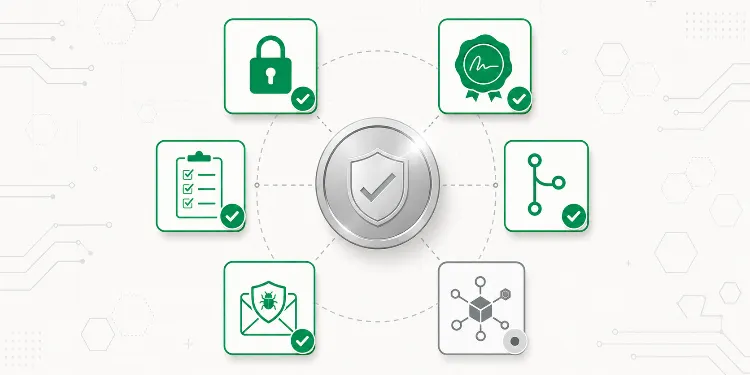
TL;DR: http4k meets every OpenSSF passing and silver criterion - reporting, change control, quality, security, analysis. It’s the unshowy plumbing of running a project responsibly, and this post is a tour of it. We’re a handful of mostly-mechanical items off gold, plus one criterion we’re deliberately not chasing - and that one’s the interesting bit.
Why bother?#
A badge is a receipt, not an achievement. Nobody adopts http4k because of a shield in the README. But the work behind the shield is real, and it’s the difference between a library you can bet a business on and one you’re quietly nervous about. Over five million downloads a month and 200+ modules is a lot of other people’s production traffic. The responsibility scales with it.
So the practices below aren’t box-ticking for a badge - the badge just happens to be a convenient checklist for things we’d do anyway.
The unglamorous list#
Tell people how to report a problem. There’s a real Coordinated Vulnerability Disclosure policy and GitHub private reporting, with a committed response window - report privately, get a fix before anything goes public. No “email a maintainer and hope”.
Change control that assumes the worst. The build and release pipeline is treated as an attack surface, with its own documented threat model. GitHub Actions are pinned to exact commits, the Gradle wrapper is validated on every push, CI tokens run least-privilege, fork PRs never see secrets, and branch protection plus CODEOWNERS routes anything touching the build or release path to core maintainers. The workflows themselves are generated from code with typeflows, so the whole pipeline stays consistent and reviewable rather than drifting through hand-edited YAML.
Prove it works - every time. Automated tests run on every check-in, we develop test-first, coverage sits north of 80%, and every bug fix ships with a regression test. When we pointed Claude Opus at the codebase for four rounds of adversarial security review, that whole exercise (three new CVEs and ~40 hardenings) only worked because the suite was there to catch what the fixes broke.
Watch the dependencies. Dependabot plus a submitted dependency graph on every build, with a documented remediation threshold: a release doesn’t get cut while there’s an unresolved high/critical dependency vulnerability or a licence violation. CodeQL runs SAST on every push and PR; detekt handles static analysis.
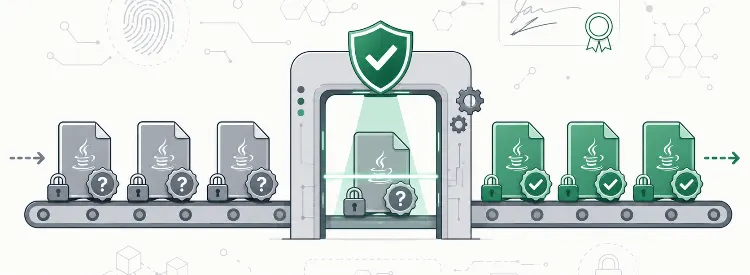
Sign what we ship. Artifacts are PGP-signed on Maven Central, and the enterprise distribution goes further - cosign signatures, SLSA Build L2 provenance and CycloneDX SBOMs for every module, verifiable offline. (More on making that assurance automatic in your own build very soon.)
None of that is a headline feature. It’s just what “responsible” cashes out to when you write it down.
The road to gold - and the fork we won’t take#
Gold is stricter, and we’re at 78% of it. Some of the gap is quick and on the list - nudging statement coverage from 81% past 90%, and wiring a dynamic-analysis (fuzzing) step into the release pipeline. Some is a bigger lift, like applying per-file licence headers across the whole tree. We’ll work through them.
One gold criterion we’re deliberately leaving unmet: it wants a second human to review and approve every change before it merges. We practise iterative trunk-based development - maintainer commits land on trunk directly, in small continuous increments, under full CI, CodeQL, wrapper validation and branch protection. Every external contribution is still reviewed through CODEOWNERS; what we don’t do is put a mandatory human review queue in front of the core team’s own commits.
That’s a values choice, not an oversight - and the OpenSSF entry records it as exactly that. Trunk-based development is how high-throughput teams actually ship, and we’ll take fast, well-tested, continuously-integrated increments with automated gates over a review queue that mostly generates ceremony. Silver with our eyes open beats gold by process theatre.
The point#
The badge isn’t the point; being the kind of project you can safely build on is. The homework above is what that looks like when nobody’s grading it - the badge just confirms we’re marking our own work honestly. If you want to check ours, it’s all public, as it should be.
Peace out.